

Should Sellers Stay Home During House Showings? What Buyers Really Experience

Should Sellers Stay Home During a Showing? Here’s What Buyers May Not Tell You
You cleaned the house.
You put away the clutter.
You made the beds, wiped down the counters, turned on the lights, and made sure everything looks exactly the way you want it.
Then your REALTOR® calls:
“We have a showing scheduled.”
So you think…
Why should I have to leave? It’s my house.
And you're absolutely right about one thing:
It is your home, and ultimately, the decision is yours.
But if you're selling that home, there's another question worth asking:
Does staying home help you accomplish the goal—or could it unintentionally make selling harder?
Because what feels completely harmless to a seller can change the entire experience for a buyer.
And sometimes, buyers won't tell you that.
They'll simply leave.
 A Showing Is More Than Someone Looking at Your House
When buyers schedule a showing, they're not simply inspecting rooms.
They're trying to imagine a life.
They're walking into the kitchen wondering where they'll drink their morning coffee.
They're looking into bedrooms and imagining where furniture might go.
They're standing in the backyard thinking about children, pets, gardens, cookouts, or quiet Saturday mornings.
They're opening closets.
They're evaluating storage.
They're discussing renovations.
They're asking their agent questions.
And sometimes they're saying things you probably don't want to hear.
“I hate that flooring.”
“We'd have to redo this kitchen.”
“This bedroom is smaller than I expected.”
That's normal.
Buyers need enough freedom to process the property honestly.
When the seller is standing nearby, that freedom can disappear.
Buyers Behave Differently When the Seller Is Home
This is one of the biggest reasons I generally recommend giving buyers privacy during a showing.
The presence of the homeowner can change buyer behavior.
A buyer who would normally spend 25 minutes exploring a home may spend 10.
Someone who would normally open a closet may decide it feels intrusive.
A couple who needs to discuss whether they could remove a wall may wait until they're back in the car.
A buyer who wants to tell their agent,
“I really love this house.”
may deliberately avoid saying it because they don't want the seller to know how interested they are.
The seller may think:
They barely looked at anything. They must not have liked it.
Meanwhile, the buyers may have loved the house.
They simply didn't feel comfortable exploring it.
That's a problem we can prevent.
 Buyers Need Permission to Mentally Move In
There is an emotional transition that needs to happen when a property enters the market.
To the seller, it is still:
my kitchen.
my bedroom.
my backyard.
my home.
But during a showing, we're trying to give the buyer enough psychological space to begin thinking:
my kitchen?
my bedroom?
my backyard?
could this become my home?
That shift matters.
It's difficult for buyers to mentally move into a property when the current owner is physically standing in it.
The goal isn't to erase the seller from the home.
The goal is to temporarily create enough space for another person to imagine themselves there.
“But I Can Answer Their Questions!”
This is probably one of the most understandable reasons sellers want to remain home.
You know your house better than anyone.
You know when the roof was replaced.
You know which room gets the best morning light.
You know how quiet the neighborhood is.
You know the neighbors.
You know what you've upgraded.
You may know exactly why the buyer should purchase it.
So naturally, you may think:
Wouldn't it help if I were here to explain everything?
Sometimes the opposite happens.
Too much information at the wrong moment can overwhelm buyers.
There is also another important consideration:
Sellers can unintentionally reveal information that affects negotiation.
A casual conversation can quickly become:
“We already bought another house.”
“We really need to close before…”
“We're moving because…”
“We've had trouble getting offers.”
“We'd probably negotiate.”
None of those comments may feel significant in the moment.
But information has value during a negotiation.
Part of my job as a listing agent is helping protect my seller's negotiating position—not simply marketing the property.
Questions from the buyer's agent can be directed to the listing agent, and we can provide appropriate information without unnecessarily exposing the seller's position.
 You Don't Need to Personally Sell the House
This one is important.
The seller should not feel responsible for conducting the showing.
That's what your real estate professionals are there for.
When sellers stay home, they sometimes feel obligated to become tour guides.
“Let me show you this.”
“Did you see the new countertops?”
“Come look at the garage.”
“We replaced that last year.”
“Wait until you see the backyard.”
The intention is good.
But now the buyer is following the seller's tour instead of exploring the property naturally.
Buyers often have their own priorities.
One buyer may care deeply about the kitchen.
Another may immediately head toward the garage.
Another wants to inspect the primary bedroom.
An investor may spend more time looking at systems, condition, layout, or potential improvements.
Give them room.
A showing should feel like an opportunity to explore—not a guided presentation they can't politely escape.
Silence Does Not Mean Disinterest
Sellers understandably want feedback.
After a showing, one of the first questions is often:
“What did they think?”
And I understand why.
Selling your home is emotional.
You're waiting.
You're wondering.
You're trying to interpret every little signal.
But buyers don't always reveal what they're thinking during the showing.
In fact, their agent may specifically advise them not to.
Why?
Because negotiation can begin before an offer is ever written.
If a buyer walks through your kitchen announcing,
“THIS IS IT! I HAVE TO HAVE THIS HOUSE!”
they have potentially revealed something important.
A savvy buyer's agent may encourage them to save those conversations until they're outside the property.
So don't assume a quiet buyer isn't interested.
And don't assume a fast showing automatically means rejection.
Let the process work.
What About Security?
This is another understandable concern.
Sellers may worry about strangers entering their homes.
That's why showing procedures matter.
Depending on the property, brokerage, MLS system, and showing arrangements, there may be scheduling systems, electronic lockbox records, agent identification, appointment requirements, cameras, alarm systems, or other security measures in place.
Sellers should discuss their concerns with their listing agent before the home begins showing.
And there are practical things sellers can do.
Secure medications.
Secure firearms.
Remove or lock away jewelry.
Protect financial documents.
Secure sensitive paperwork.
Protect passwords and personal information.
Remove irreplaceable valuables.
Those are good practices regardless of whether the seller plans to remain home.
What About Cameras Inside the Home?
Many homeowners have security cameras, video doorbells, baby monitors, smart-home devices, and other technology capable of recording activity.
The rules surrounding audio and video recording can vary, and sellers should discuss applicable laws and disclosure requirements with their real estate professional and, when appropriate, an attorney.
But there is also a strategic consideration.
Even when surveillance is legally permitted, sellers should understand that buyers who know or suspect they're being recorded may behave differently.
They may save their reactions for outside.
They may avoid discussing price.
They may avoid saying what they like.
They may avoid discussing what concerns them.
From a negotiation standpoint, that may mean the seller learns much less than expected anyway.
Privacy can actually produce a more natural showing experience.
What If Leaving the Home Is Difficult?
There are legitimate situations where leaving for every showing isn't easy.
A seller may:
- work from home;
- have limited mobility;
- care for a family member;
- have young children;
- have pets that require special arrangements;
- have transportation limitations; or
- face another circumstance that makes leaving difficult.
That's different from simply deciding:
“I don't want to leave.”
This is where communication with your listing agent becomes important.
We can discuss showing windows.
We can consider advance-notice requirements.
We can block certain times.
We can coordinate around work schedules.
We can discuss how pets will be handled.
We can create a showing strategy that respects the seller's circumstances while still making the property reasonably accessible to buyers.
Real estate rarely requires a one-size-fits-all solution.
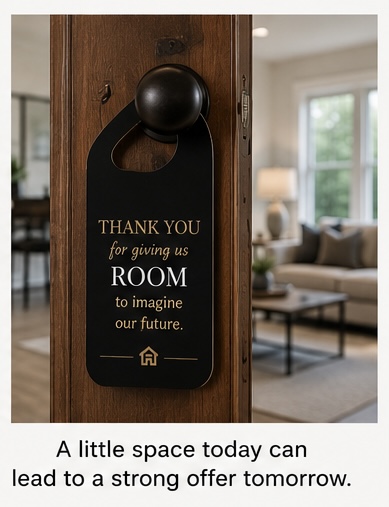 Accessibility Matters More Than Sellers Sometimes Realize
Here's another part of this conversation that shouldn't be ignored.
Every additional obstacle placed between a buyer and a showing can reduce opportunity.
Twenty-four-hour notice.
Only certain days.
Only certain hours.
Seller must be present.
Listing agent must be present.
No evening appointments.
No weekend appointments.
Individually, some restrictions may be completely reasonable.
But stack enough of them together and eventually a buyer says:
“We'll just see the other house.”
That doesn't mean sellers must surrender control of their schedules.
It means we should understand the tradeoff.
Convenience for the seller and accessibility for the buyer sometimes compete with one another.
My job is to explain that honestly so the seller can make an informed decision.
The Seller Makes the Decision. The Agent Explains the Consequences.
This distinction matters to me.
A REALTOR® advises.
The client decides.
I don't believe in ordering sellers around simply because something is “how it's normally done.”
If you want to remain home during showings, that's a conversation we can have.
But my responsibility is also to tell you what I know.
I need you to understand that your presence may change buyer behavior.
It may shorten the showing.
It may prevent candid conversations between the buyer and their agent.
It may make buyers uncomfortable opening closets or exploring spaces.
It may make it harder for them to imagine the home as their own.
It may cause you to accidentally reveal information that could later affect negotiations.
And ultimately, it may interfere with the very thing we're trying to accomplish:
creating the best possible environment for a qualified buyer to connect with your property.
Then you decide.
That's what representation should look like.
Selling a Home Requires a Shift in Perspective
One of the hardest parts of selling isn't paperwork.
It's changing how you see the property.
Yesterday, it was simply your home.
Today, it is still your home—but it is also a product competing in a marketplace.
That means some decisions need to be evaluated differently.
Not:
What makes me most comfortable?
But:
What gives this property the strongest opportunity to sell under terms that support my goals?
Those two answers won't always be the same.
That's where strategy enters the conversation.
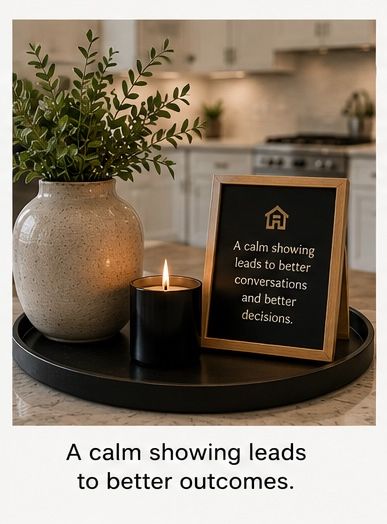 My Recommendation to Sellers
Whenever reasonably possible:
Give buyers the house.
Not permanently.
Not emotionally.
Just for the showing.
Take a drive.
Grab coffee.
Walk the dog.
Run an errand.
Go have lunch.
Give them enough space to walk slowly.
Open the closets.
Stand in the kitchen.
Talk to their agent.
Notice the things they love.
Notice the things they don't.
And—most importantly—
imagine that your home could become theirs.
You hired your listing agent to help market, position, protect, and negotiate the sale of your property.
Let the showing do its job.
Sometimes the most powerful thing a seller can do during a showing is simply...
give the buyer room.
Thinking About Selling a Home in North Carolina?
Selling a home involves far more than putting a sign in the yard and waiting for an offer.
Pricing, preparation, presentation, showing strategy, marketing, communication, negotiation, and contract management all influence the experience—and potentially the outcome.
If you're considering selling in the Triad, Alamance, or Triangle areas of North Carolina, I'd be happy to talk through your goals and help you understand your options before you make your next move.
Jessica J. Baldovinos, REALTOR®
Certified Mentor | Investor Advisor
NCREL #312309
Brokered by Real Broker, LLC
Website: www.JessicaJBRealtor.net
Schedule a consultation: https://calendly.com/jessicajbrealtor
Social: @JessicaJBRealtor
This article is for general educational purposes and is not legal advice. Real estate laws, brokerage practices, contracts, and individual circumstances can vary.

Categories
- All Blogs (676)
- "Did You Know?" (12)
- Best Places to Live (2)
- Buying/Selling Raw Land (48)
- Distressed/Foreclosure Education (61)
- Divorce in NC? Own Real Estate? You Should Know... (57)
- First Time Home Buyer Education (87)
- For Aspiring Agents (20)
- For NC Wholesalers (33)
- For Real Estate Agents (55)
- FSBO Tips (92)
- Holiday Moves (6)
- Homebuyer Tips (114)
- Homeowner Tips (116)
- Homesteaders (10)
- Keeping it Real (24)
- Market Forecast (22)
- Market Updates and Trends (109)
- Moving to North Carolina (7)
- My Story (3)
- NC Luxury Market Data (45)
- NC Probate (3)
- New Construction Homes (33)
- Psychology of Real Estate (6)
- Real Estate Investor Education (139)
- Sociology and Real Estate (5)
- STOP Renting! START Owning! (66)
- Win PRIZES! (1)
Recent Posts









GET MORE INFORMATION

REALTOR® NCREA CREIPS License ID: 312309