
Why You May NOT Want to Become a Real Estate Agent in NC
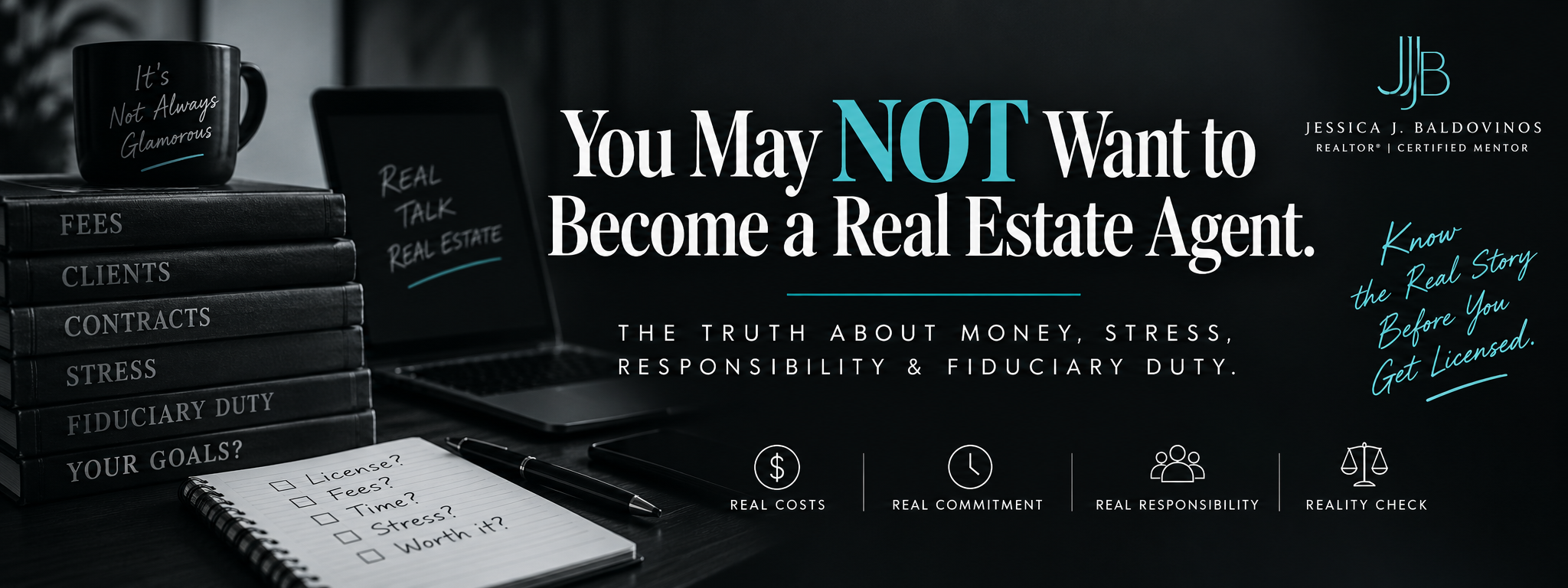
If you're thinking about getting your real estate license because you love houses, want a flexible schedule, or heard you can make six figures selling homes, I want to tell you something you may not hear in real estate school:
You may not want to become a real estate agent.
And I say that as a REALTOR®, Certified Mentor, and someone who genuinely loves this business.
Real estate can be an incredible career. But the version you see on social media—beautiful homes, closing-day photos, commission checks, flexible schedules and perfectly staged content—is only one side of it.
There is another side.
It is expensive.
It can be inconsistent.
It can be emotionally exhausting.
And perhaps most importantly, once you agree to represent someone, this business is not supposed to revolve around what is best or easiest for you.
Getting Licensed Is Only the Beginning
Passing the real estate exam does not hand you a real estate business.
It gives you permission to begin building one.
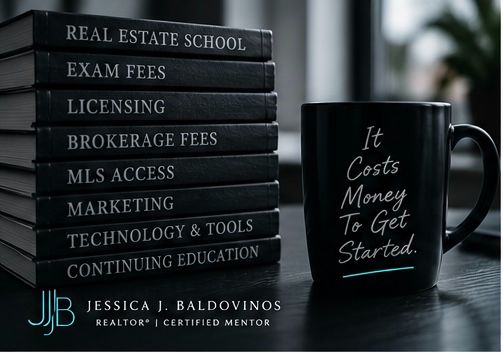
Before you ever earn your first commission, you may be paying for education, licensing, background checks, brokerage-related expenses, association membership, MLS access, lockbox or showing technology, electronic signature and transaction tools, CRM and marketing systems, signs, photography, advertising, continuing education, post-licensing education and other business expenses.
Not every agent will have every one of these expenses, and costs vary depending on the brokerage, association and tools you choose.
But there is one lesson new agents often learn quickly:
It costs money to be in real estate even when real estate isn't paying you yet.
Your bills don't stop because you haven't closed anything this month.
 There Is No Guaranteed Paycheck
You can work for weeks—or months—without getting paid for that work.
You can spend hours educating a buyer, researching properties, scheduling appointments, driving to showings, writing offers and communicating with lenders and other agents.
Then the buyer can decide not to buy.
You can spend hours preparing a listing presentation, researching comparable properties and building a marketing strategy.
Then the seller can choose another agent—or decide not to sell at all.
Even when you get a property under contract, you still aren't necessarily getting paid.
Deals fall apart.
Financing changes.
Inspections uncover problems.
Appraisals come in low.
People change their minds.
Circumstances change.
And generally, your commission arrives only if the transaction successfully makes it to closing and you are entitled to compensation.
That means you need to know how to manage money when business is good enough to survive the months when it isn't.
 “Flexible Schedule” Doesn't Always Mean What People Think It Means
Real estate can absolutely give you flexibility.
But flexibility and freedom are not the same thing.
Your buyer may finally find the right house on Saturday afternoon.
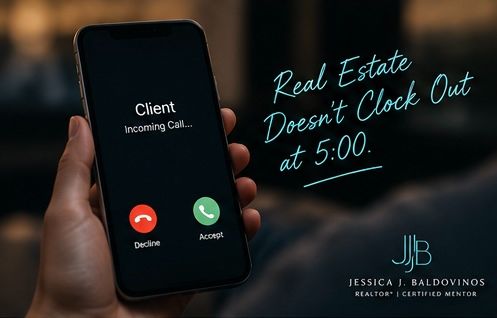
An offer may need attention while you're having dinner.
An inspection issue may surface while you're trying to handle something in your own life.
A seller may be anxious because their home has been sitting longer than expected.
A lender may need something immediately.
Another agent may send an important update at the worst possible time.
You need boundaries. I strongly believe agents should have them.
But you also have to understand that you are working in a business involving people's homes, money, moves, families, deadlines and major life decisions.
Your calendar isn't the only calendar that matters.
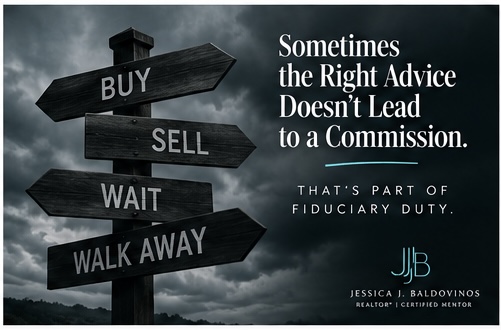 Your Client's Goals May Have to Come Before Your Commission
This is the part I wish more people understood before getting licensed.
Real estate isn't simply sales.
Representation comes with duties.
When you establish an agency relationship with a client, you take on legal and professional responsibilities. Those responsibilities can include loyalty, obedience to lawful instructions, disclosure of material information, confidentiality, reasonable skill and care, and accounting for money or property entrusted to you.
In plain English?
Sometimes doing your job correctly means advising your client to do something that results in you making less money—or no money at all.
Maybe your buyer should walk away.
Maybe the house isn't right for them.
Maybe the numbers don't make sense for the investor.
Maybe your seller shouldn't accept the offer you're hoping they accept.
Maybe the client needs more information before making a decision.
Maybe the transaction simply should not close.
Your job isn't to manufacture a closing because you need a commission.
Your job is to represent your client's interests within the duties you owe them.
That's one of the biggest differences between someone who can sell and someone who can responsibly represent another person in a real estate transaction.
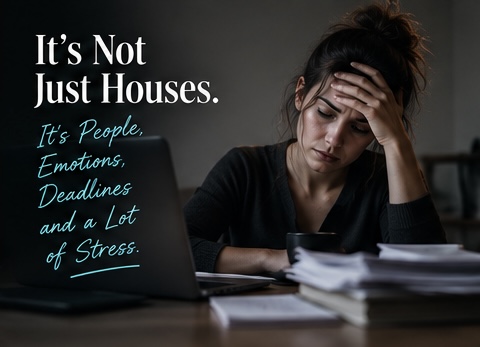 You Will Carry Other People's Stress
Real estate transactions involve enormous amounts of emotion.
A first-time buyer may be terrified.
A seller may need proceeds from their sale to make their next move possible.
A couple may disagree about what to buy.
A family may be selling because of divorce, death, financial hardship or another major life change.
An investor may have significant money riding on the numbers.
Clients can be excited, scared, frustrated, impatient and overwhelmed—sometimes all in the same day.
Your responsibility isn't to absorb every emotion as your own.
But you do need enough emotional discipline to remain useful when the people you're representing are stressed.
Sometimes that means being the calmest person in the conversation when you don't feel particularly calm yourself.
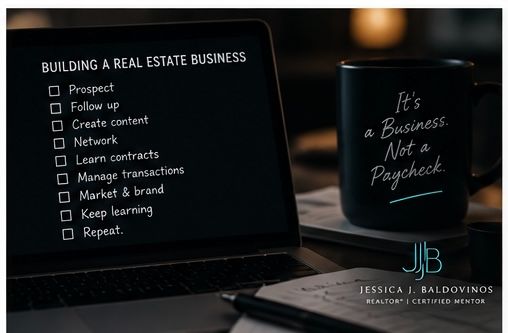 You Are Running a Business While Serving Clients
Nobody magically hands you clients because you passed the exam.
You still have to prospect.
Follow up.
Market.
Create content.
Network.
Learn contracts.
Understand your market.
Build relationships.
Track leads.
Answer calls.
Schedule consultations.
Attend inspections.
Communicate with lenders.
Coordinate transactions.
Solve problems.
Keep learning.
And somewhere in there, you're supposed to operate an actual business.
Many new agents underestimate how much of real estate happens before anyone ever hands you a set of keys for a closing photo.
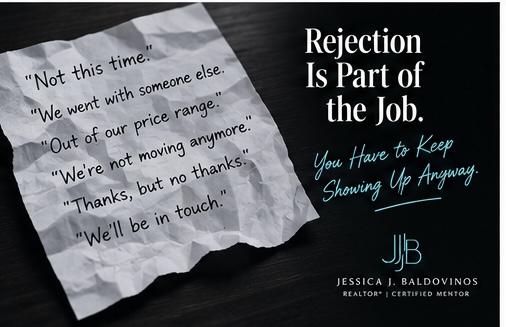 Rejection Is Part of the Job
People will ignore you.
Leads will ghost you.
Someone who told you they were absolutely going to work with you may use another agent.
You will lose listing appointments.
Your offers will lose.
People will question your expertise.
You will make mistakes.
You will have transactions that make you wonder why you ever chose this career.
And then you have to wake up and prospect again.
If rejection destroys your motivation for days at a time, real estate can become an extremely difficult business.
Your First Year May Look Nothing Like Social Media
There are agents who build successful businesses quickly.
There are also agents who struggle for months before gaining traction.
Your experience will depend on your market, skills, consistency, relationships, financial situation, brokerage, training, mentorship and willingness to actually do the work.
Getting licensed is not a shortcut to financial freedom.
A real estate license is a professional credential. It is not a business plan.
 So Why Would Anyone Choose This Career?
After everything I just said, you might expect me to tell you not to do it.
I'm not.
I want you to know what you're choosing.
Because if you understand the expenses, uncertainty, rejection, responsibility and stress—and you still feel drawn to this work—then we can have a very different conversation.
Real estate gives you the opportunity to build something of your own.
You can become exceptionally knowledgeable in a market.
You can advocate for people during some of the biggest financial decisions of their lives.
You can help someone become a homeowner.
You can help a family sell a property and move into their next chapter.
You can help investors recognize opportunities and understand risk.
You can build relationships that last far beyond one transaction.
And yes, you can build a successful business.
But I don't believe we help aspiring agents by pretending the hard parts don't exist.
 Before You Pay for Real Estate School, Ask Yourself This
Don't just ask:
“How much money can I make?”
Ask:
Can I continue working when I don't know exactly when my next paycheck is coming?
Can I hear “no” repeatedly without giving up?
Can I manage a business and serve clients at the same time?
Can I give someone sound guidance even when that guidance doesn't benefit my commission?
Can I protect my boundaries without forgetting that I've accepted responsibility for someone else's transaction?
Am I willing to keep learning after I pass the exam?
And maybe the biggest question:
Do I actually want to represent people—or do I just like the idea of selling houses?
Those are two very different things.
If those questions make you reconsider getting licensed, that's not necessarily a bad outcome.
It is far better to understand the reality before investing your time and money than to discover it after you're licensed.
And if you read all of this and thought, Yes. I still want to do this—
then you may be ready to start talking about how to build the business the right way.
Jessica J. Baldovinos, REALTOR® | Certified Mentor
I work with aspiring and newly licensed real estate agents who want a realistic understanding of the business—not just the highlight reel.
📲 (336) 567-5843
Brokered by Real Broker, LLC — NCREL #312309
@JessicaJBRealtor
Book: calendly.com/jessicajbrealtor
Categories
- All Blogs (679)
- "Did You Know?" (14)
- Best Places to Live (5)
- Buying/Selling Raw Land (48)
- Distressed/Foreclosure Education (61)
- Divorce in NC? Own Real Estate? You Should Know... (57)
- First Time Home Buyer Education (88)
- For Aspiring Agents (20)
- For NC Wholesalers (33)
- For Real Estate Agents (55)
- FSBO Tips (92)
- Holiday Moves (6)
- Homebuyer Tips (117)
- Homeowner Tips (118)
- Homesteaders (10)
- Keeping it Real (24)
- Market Forecast (23)
- Market Updates and Trends (112)
- Moving to North Carolina (10)
- My Story (3)
- NC Luxury Market Data (45)
- NC Probate (3)
- New Construction Homes (33)
- Psychology of Real Estate (6)
- Real Estate Investor Education (139)
- Sociology and Real Estate (5)
- STOP Renting! START Owning! (67)
- Win PRIZES! (1)
Recent Posts






GET MORE INFORMATION

REALTOR® NCREA CREIPS License ID: 312309