
How Much Money Do You Actually Need to Buy a House in North Carolina?
 How Much Money Do You Actually Need to Buy a House in North Carolina?
If you're thinking about buying a home in North Carolina, one of your first questions is probably:
“How much money do I actually need?”
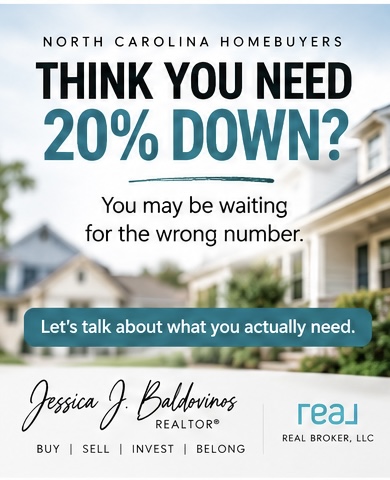
And if you've been assuming the answer is 20% of the purchase price, you may be waiting much longer than necessary.
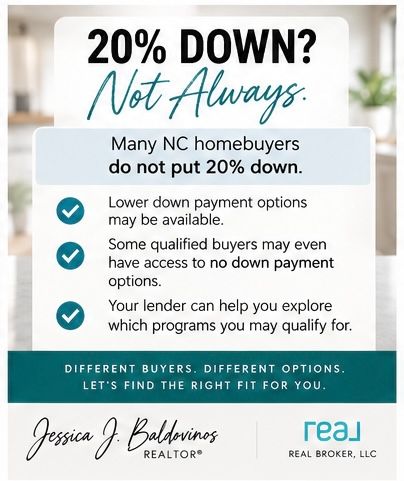
Many homebuyers do not put 20% down.
But there's another side to this conversation that doesn't get explained nearly enough:
Your down payment is not the only money you may need to buy a house.
Depending on your financing, the property, your contract terms, inspections, negotiated seller concessions, and whether you qualify for assistance, there may be several expenses to prepare for.
Let's break them down.
 1. Your Down Payment
Your required down payment depends largely on the loan program you qualify for.
Some mortgage programs may allow relatively low down payments, and certain qualified buyers may even have access to financing options that require no down payment.
That means you should not automatically assume:
“I can't buy because I haven't saved 20%.”
A mortgage lender can evaluate your income, credit, debt, assets, eligibility, and financial goals to determine which loan programs may be available to you.
Example: A $250,000 Home
Twenty percent of $250,000 is $50,000.
That's a big number—and seeing numbers like that online causes some potential buyers to assume homeownership isn't realistic for them.
But a buyer using a loan requiring 3.5% down would be looking at a down payment of approximately:
$8,750
At 3%:
$7,500
Those examples don't mean every buyer will qualify for those terms. They demonstrate why you shouldn't decide whether you can afford to buy based solely on the traditional 20%-down assumption.
 2. Closing Costs
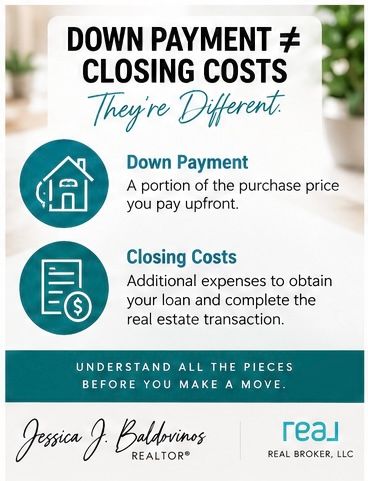
Your down payment and closing costs are different expenses.
Closing costs can include expenses associated with obtaining your loan and completing the real estate transaction.
Depending on the transaction, these may include items such as:
- lender fees
- attorney and settlement expenses
- title-related expenses
- appraisal fees
- prepaid property taxes
- homeowners insurance
- escrow funding
- recording fees
- other transaction-specific expenses
The exact amount varies.
This is why I don't like giving buyers a random percentage and telling them, “That's what you'll need.”
Your lender can provide estimates based on your financing, while your real estate agent can help you understand how the contract and negotiations may affect your overall cash requirement.
3. Due Diligence Money
North Carolina buyers also need to understand due diligence money.
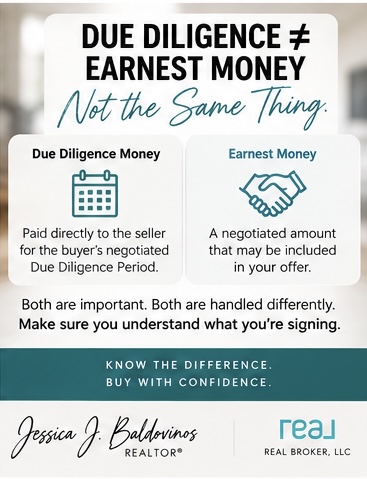
The Due Diligence Fee is negotiated between the buyer and seller and is paid directly to the seller in exchange for the buyer's negotiated Due Diligence Period.
This is an important part of a North Carolina purchase contract because the buyer's money may be at risk depending on the circumstances of the transaction.
There is not one standard Due Diligence Fee that every buyer should offer.
The amount should be considered in relation to the property, competition, market conditions, the buyer's financial situation, the strength of the offer, and the amount of risk the buyer is comfortable accepting.
Before signing an offer, you should understand exactly what you're agreeing to.
4. Earnest Money
Earnest money is another negotiated amount that may be included in an offer.
And no:
Earnest money and due diligence money are not the same thing.
They are handled differently and can have different implications for the buyer.
This is one of the reasons I believe buyers should understand the North Carolina offer process before they fall in love with a house.
When you're standing inside the kitchen of the house you desperately want is not the ideal time to learn what these terms mean.
5. Home Inspection
A home inspection is another expense buyers should prepare for.
The cost will vary depending on the property and inspector, and buyers may choose or need additional inspections or evaluations depending on the home.
Those could potentially include evaluations related to:
- HVAC systems
- roofing
- plumbing
- electrical systems
- structural concerns
- pests
- septic systems
- wells
- radon
- moisture
- other property-specific concerns
Not every home requires every inspection.
The important point is that buyers should leave room in their budget for investigating the property, not just purchasing it.
6. Appraisal
If you're financing the purchase, your lender may require an appraisal.
The appraisal is primarily for the lender's benefit and helps determine whether the property provides sufficient collateral for the loan.
An appraisal is not the same thing as a home inspection.
Buyers sometimes confuse the two, but they serve very different purposes.
7. Homeowners Insurance
Your lender will generally require homeowners insurance when you're financing a property.
Depending on your loan structure and closing date, some insurance costs may need to be paid or collected before or at closing.
Properties with certain risks or characteristics may also have different insurance requirements or costs.
That's another reason it's smart to investigate insurance before you're sitting at the closing table.
8. What About Seller-Paid Closing Costs?
Here's where good planning and negotiation can make a significant difference.
Depending on the loan program, contract, seller motivation, property, appraisal, and other circumstances, it may be possible to negotiate for the seller to contribute toward certain buyer closing expenses.
That does not mean every seller will agree.
And sometimes asking for a large seller contribution while simultaneously negotiating aggressively on price can weaken an offer.
This is where strategy matters.
The question isn't simply:
“Can I ask the seller to pay my closing costs?”
A better question is:
“How should we structure this offer based on my finances, this property, and the current negotiating environment?”
 9. What About Down Payment Assistance?
Some North Carolina homebuyers may qualify for down payment or closing-cost assistance programs.
Eligibility can depend on factors such as:
- income
- household circumstances
- purchase price
- property location
- loan program
- credit requirements
- first-time buyer status
- program funding and availability
And here's something important:
Don't assume you don't qualify.
But also don't assume that because you saw a program advertised online, you automatically do.
A knowledgeable lender should review your actual circumstances and explain what programs are currently available and what requirements apply.
So… How Much Money Do You Actually Need?
The most accurate answer is:
It depends on your specific purchase.
Your potential cash requirement can include some combination of:
Down payment + closing costs + due diligence money + earnest money + inspections + appraisal + insurance-related expenses
Then potential seller concessions, lender credits, assistance programs, and your financing structure can change that number.
That's why asking Google—or an AI tool—“How much money do I need to buy a $300,000 house?” can give you a useful starting point, but it cannot tell you exactly what your transaction will require.
Your financial picture and your contract matter.
“I'm Not Ready Yet. Should I Still Talk to Someone?”
Yes.
In fact, I'd rather talk to you before you're ready.
You don't need to call me and say:
“Jessica, I'm buying a house next week.”
You can say:
“Jessica, I want to buy a home someday, but I have no idea what I need to do first.”
That's a perfectly good place to begin.
Maybe you're three months away.
Maybe you're six months away.
Maybe you're a year away.
Maybe your credit needs work.
Maybe you need to save.
Maybe you're much closer than you think.
The goal of an early conversation isn't to pressure you into buying a house.
It's to figure out where you are now, where you want to go, and what steps may help you get there.
Buying a Home in Burlington, Alamance County, the Triad or Surrounding North Carolina Areas?
I'm Jessica J. Baldovinos, REALTOR® and Certified Mentor with Real Broker, serving buyers and sellers throughout Burlington and Alamance County, the Triad—including Greensboro, High Point and Winston-Salem—Thomasville and Davidson County, and surrounding North Carolina communities.
My approach begins with education.
Before we start touring houses, I want you to understand the process, your financing position, the major expenses involved, and the decisions you'll eventually be asked to make.
Because buying a home isn't just about finding one you love.
It's about understanding what you're signing, what you're spending, and whether the decision makes sense for you.
Ready to Figure Out Your Starting Point?
You don't have to be ready to buy today.
Start with a conversation.
📲 Jessica J. Baldovinos, REALTOR®
Certified Mentor | Real Broker, LLC
NCREL #312309
(336) 567-5843
JessicaJBRealtor.net
@JessicaJBRealtor
Educational information only. Mortgage programs, assistance programs, costs, contract terms, and eligibility requirements can change. Buyers should consult the appropriate mortgage, legal, tax, insurance, and other professionals regarding their individual circumstances.

Categories
- All Blogs (676)
- "Did You Know?" (12)
- Best Places to Live (2)
- Buying/Selling Raw Land (48)
- Distressed/Foreclosure Education (61)
- Divorce in NC? Own Real Estate? You Should Know... (57)
- First Time Home Buyer Education (87)
- For Aspiring Agents (20)
- For NC Wholesalers (33)
- For Real Estate Agents (55)
- FSBO Tips (92)
- Holiday Moves (6)
- Homebuyer Tips (114)
- Homeowner Tips (116)
- Homesteaders (10)
- Keeping it Real (24)
- Market Forecast (22)
- Market Updates and Trends (109)
- Moving to North Carolina (7)
- My Story (3)
- NC Luxury Market Data (45)
- NC Probate (3)
- New Construction Homes (33)
- Psychology of Real Estate (6)
- Real Estate Investor Education (139)
- Sociology and Real Estate (5)
- STOP Renting! START Owning! (66)
- Win PRIZES! (1)
Recent Posts








GET MORE INFORMATION

REALTOR® NCREA CREIPS License ID: 312309