
What Sociology Taught Me About Being a Better Real Estate Agent
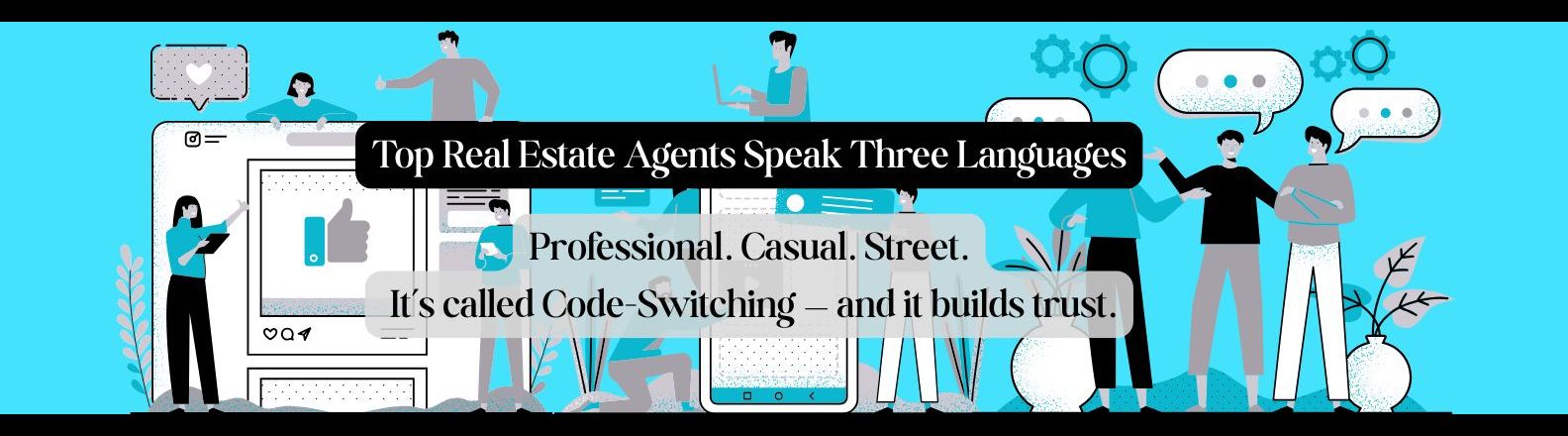
If you've ever spent time around successful real estate agents, you might notice something interesting.
They don’t speak the same way to everyone.
They may sound highly professional in one conversation, relaxed and casual in another, and completely different again when connecting with someone from a different background.
To some people this may seem inconsistent.
But in reality, it’s something far more powerful.
It’s called code-switching.
And many of the best real estate agents do it naturally.
What Is Code-Switching?
Code-switching is the ability to adapt your communication style depending on who you are speaking with.
This doesn't mean changing who you are.
It means adjusting how you communicate so the other person feels comfortable, understood, and respected.
It’s a concept widely studied in sociology and psychology, and it happens in nearly every social environment.
Real estate just happens to be a profession where it becomes extremely visible.
The Three Communication “Languages”
Over time, many agents realize they naturally move between three different communication styles depending on the situation.
1. Professional Language
This is the language used during contracts, negotiations, and formal conversations.
It’s precise, structured, and often filled with industry terminology.
You’ll hear it during conversations about:
• purchase agreements
• due diligence
• financing
• inspections
• legal obligations
Clients rely on agents to be clear, competent, and professional in these moments.
2. Casual Language
This is the everyday conversational tone many agents use when building relationships.
It’s relaxed, friendly, and easy to understand.
You might hear it when agents say things like:
"Let’s walk through the house together and see what you think."
"Don’t worry — we’ll navigate that part together."
This language helps clients feel comfortable and supported during what can be a stressful process.
3. Street Language
Sometimes agents find themselves working with clients who communicate more comfortably using slang or cultural dialects.
In those situations, switching communication style can build instant trust and connection.
It shows that the agent is relatable and authentic, not distant or robotic.
For many agents who grew up around diverse communities, this happens naturally.
It’s not an act.
It’s simply another communication style.
Why Code-Switching Matters in Real Estate
Real estate agents interact with people from every walk of life.
One day an agent may be speaking with:
• a first-time buyer in their early twenties
• a seasoned investor analyzing cash flow
• a corporate relocation client
• a family purchasing their first home
• a contractor evaluating renovation costs
Each person communicates differently.
Agents who can adapt their communication style are often able to build rapport much faster.
And in real estate, rapport builds trust.
Trust builds business.
It’s Not Being Fake — It’s Being Fluent
Some people misunderstand code-switching and assume it means someone is being inauthentic.
In reality, it’s closer to being multilingual in communication styles.
Think of it like this:
Someone who speaks both English and Spanish isn't pretending to be two different people.
They’re simply communicating in the language that best connects with the person in front of them.
The same idea applies to communication styles.
My Perspective
Because I studied sociology and psychology, I’ve always been fascinated by how people communicate and connect with one another.
Real estate has given me the opportunity to work with people from incredibly diverse backgrounds, and I’ve found that the ability to adapt communication styles often makes clients feel more comfortable throughout the process.
At the end of the day, buying or selling a home is one of the biggest financial decisions someone will ever make.
The goal isn’t to impress people.
The goal is to help them feel confident, informed, and supported.
Sometimes that simply starts with speaking their language.
 Final Thought
The most successful real estate agents aren’t just good at contracts and negotiations.
They’re good at understanding people.
And people communicate in many different ways.
Agents who learn to navigate those differences often become the ones clients trust the most.
Thinking About Buying or Selling?
If you're planning to buy, sell, or invest in real estate in the Triad or Triangle areas of North Carolina, I’d love to help guide you through the process.
Every client’s goals are different, and the best approach always starts with understanding exactly what you're trying to accomplish.
📲 Call or text (336) 567-5843
Brokered by Real Broker, LLC — NCREL #312309
Jessica J. Baldovinos | @JessicaJBRealtor
Book a consultation:
https://calendly.com/jessicajbrealtor
Categories
- All Blogs (674)
- "Did You Know?" (11)
- Best Places to Live (1)
- Buying/Selling Raw Land (48)
- Distressed/Foreclosure Education (61)
- Divorce in NC? Own Real Estate? You Should Know... (57)
- First Time Home Buyer Education (85)
- For Aspiring Agents (20)
- For NC Wholesalers (33)
- For Real Estate Agents (55)
- FSBO Tips (91)
- Holiday Moves (6)
- Homebuyer Tips (113)
- Homeowner Tips (115)
- Homesteaders (10)
- Keeping it Real (24)
- Market Forecast (22)
- Market Updates and Trends (109)
- Moving to North Carolina (5)
- My Story (3)
- NC Luxury Market Data (45)
- NC Probate (3)
- New Construction Homes (33)
- Psychology of Real Estate (6)
- Real Estate Investor Education (139)
- Sociology and Real Estate (5)
- STOP Renting! START Owning! (65)
- Win PRIZES! (1)
Recent Posts





GET MORE INFORMATION

REALTOR® NCREA CREIPS License ID: 312309