

Homesteading in 2025: What You Can Legally Do on Your Land in NC
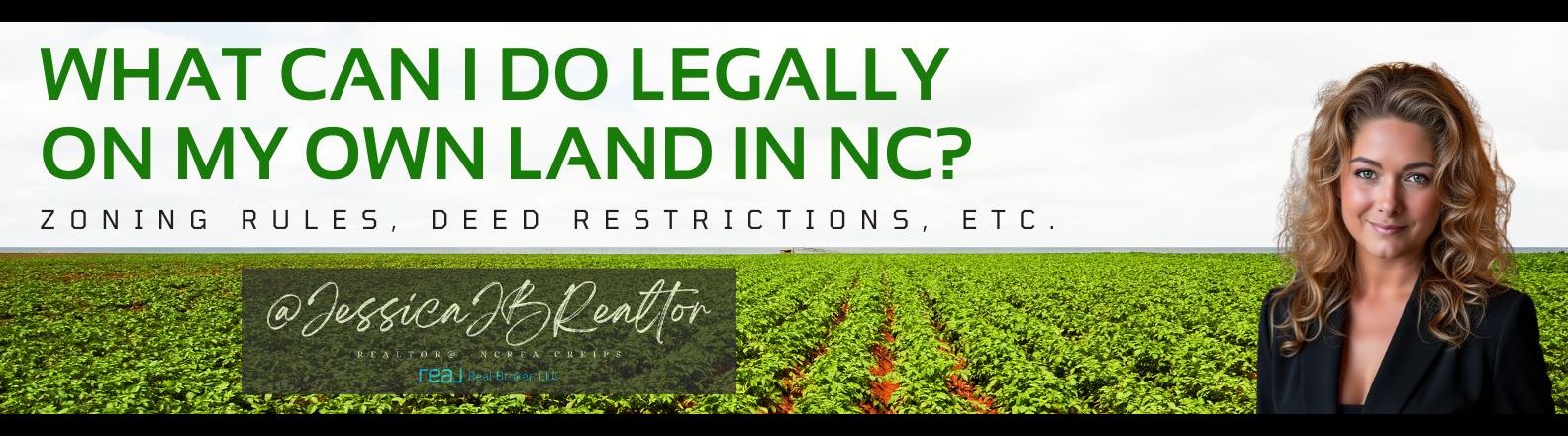
Homesteading is more than a lifestyle — it’s a dream: self-reliance, freedom, sustainability, connection to the land. In 2025, North Carolina remains one of the states where that dream is very achievable — but only if you know and respect the rules.
Before you plant, build, or set down roots, you need to know what you can legally do on raw or rural land here — and what you must check first.
✅ What’s Still Possible: Homesteading Rights & Opportunities in NC (If You Follow Rules)
🌾 Farming, Livestock & Agricultural Use — Often Exempt from Zoning
-
Under G.S. 160D-903, property used for “bona fide farming purposes” is generally exempt from county zoning restrictions. That means agriculture — crops, livestock, poultry, etc. — is often permitted even when other uses on the same parcel might be restricted. North Carolina General Assembly+1
-
That exemption extends even if the property lies within a municipality’s extraterritorial jurisdiction (ETJ), so long as it remains a bona fide farm use. FindLaw Codes+1
-
On such property, you may build farm-related structures or a residence for the owner/operator under the State Building Code; such structures shelter the “farm use.” North Carolina General Assembly+1
⚡ In short — as long as your use qualifies as farming, you’ll often have wide latitude for fields, barns, livestock, crops, and a farmhouse.
🏡 Tiny Homes, Accessory Structures & Alternative Dwelling Types — Sometimes Allowed (If Code & Zoning Permit It)
-
Tiny homes built on permanent foundations — that meet state residential building-code standards — are generally permitted as dwellings. Tiny House+1
-
That means smaller, simpler housing — cabins, tiny-house dwellings, or small structures — can be legal on land, depending on local code and zoning. Before committing: check with your county or municipal building department.
-
For accessory buildings such as barns, storage sheds, or farm-use outbuildings, building permits might not be required if built under certain size thresholds. But once you exceed those thresholds (for example, larger than a certain dimension), you likely need a permit. The Shed Depot of NC+1
👉 If your goal is a simple homestead: cabin + garden + animals + barn/stable — that combination can be legal in many parts of rural NC (with correct permits).
🛠️ Combining Homestead + Farming + Residence — A Realistic Path
Because of the “bona fide farm” exemption, NC law often allows landowners to:
-
Raise crops, livestock, poultry or other agricultural products
-
Build farm-supporting structures (barns, equipment sheds, storage)
-
Build a residence for owner/ operator
That means you can live where you farm — and do so legally, even if other zoning classifications would restrict non-farm use. North Carolina General Assembly+1
For many homesteaders, this remains the single most important legal pathway to living off-grid, farming, and building a sustainable lifestyle.
⚠️ What You MUST Check — Because Land Use + Homesteading Is Not “One-Size-Fits-All”
Even though homesteading is possible in NC, there are serious legal, zoning, and building code hurdles you must navigate.
1. Zoning & Land-Use Classification Varies by County (And Even Municipality)
-
While bona-fide farms are exempt from many zoning regulations under G.S. 160D-903, non-farm uses on that property are still subject to zoning laws. North Carolina General Assembly+2UNC School of Government+2
-
What counts as a “farm purpose” is defined strictly under state law — and what counts can change over time, or after you stop farming. North Carolina General Assembly+1
-
If you shift from “farm use” to another use (e.g. subdividing, building non-farm structures, commercial businesses) zoning restrictions may apply. FindLaw Codes+1
Bottom line: don’t assume all rural land automatically allows everything. Always verify zoning maps, permitted uses, and local regulations before buying or building.
2. Building Permits & Code Compliance Are Still Required (Often)
-
If you build a house, a dwelling, or even accessory structures beyond minimal size thresholds (for sheds, barns, etc.), NC building codes and permitting requirements apply. The Shed Depot of NC+2Sanford NC+2
-
In July 2025, a new edition of the state building code goes into effect — so any new dwelling or structure must comply with updated construction & safety standards. OSFM
3. “Tiny on Wheels” or RV-Type Dwellings Are Risky & Often Not Legal for Long-Term Residence
-
While tiny homes on permanent foundations may be accepted as residences, tiny homes on wheels (or RV-style) typically do not qualify as permanent dwelling units under many local codes. Tiny House+1
-
Using an RV or similar mobile home as a primary residence may violate local zoning or building codes, depending on the county or municipality.
If you dream of off-grid living with a mobile tiny home — check local rules carefully before you buy.
4. Non-Farm Uses (Even on Farm-Zoned Land) May Be Subject to Zoning Restrictions
Once you use your land for non-farm purposes (commercial enterprise, subdivision, rental cabins, agritourism, etc.), the property may lose the “farm exemption” and be subject to standard zoning regulations. North Carolina General Assembly+2UNC School of Government+2
That means: public zoning, building restrictions, environmental regulations — all may apply.
5. Local Variation Is HUGE — Your County Matters More Than the State Code Alone
Because zoning and land-use is largely governed at the county or municipal level, what’s legal in one county may not be legal in another — even if both are rural. Daughtry Law+2Patrick, Harper & Dixon, LLP+2
Before you buy land — especially raw land — always:
-
Check your county’s zoning maps
-
Contact the planning / permitting office
-
Ask about septic/well requirements, floodplain regulations, building setbacks, animal ordinances, permitted dwelling types
🌿 What to Do to Position Yourself for Legal, Successful Homesteading in 2025
If you want to make homesteading work without legal headache, here’s a checklist “before you buy / before you build”:
-
Confirm the zoning classification of the parcel — ask if it’s agriculture, residential, or something else
-
If you plan to farm, confirm that your intended use qualifies as a “bona fide farm purpose” under state law (livestock, crops, etc.). This helps retain zoning exemption.
-
Consult with county / municipal planning and permits office before assuming you can build a house or structure; confirm building codes and permit requirements.
-
If you plan a tiny home, ensure it will meet foundation + building-code requirements (not just RV/trailer standards).
-
If you plan livestock or animals, check local ordinances (some towns/municipalities restrict animals, livestock, fowl, especially inside town limits or small lots) American Legal Publishing+1
-
Make sure water (well or spring), septic/ waste water plan, and other utilities are feasible before purchase
-
Get a survey and verify access to the property (roads, easements, rights-of-way) — sometimes “raw land” has access or easement issues
-
If you ever pivot to non-farm uses (rental cabins, agritourism, etc.), reevaluate zoning compliance
🌟 Why 2025 Might Be a Great Time to Homestead in NC (But Smart Is Still the Key)
-
NC continues to treat bona fide farms with favorable zoning exemption — which means homesteaders still enjoy flexibility many other states don’t.
-
With demand for rural living increasing, raw land values are rising — a homestead conceived and built correctly can double as a long-term investment.
-
New building codes (effective mid-2025) aim to balance safety + efficiency, meaning modern tiny homes or small dwellings built to code will likely be easier to permit and insure. OSFM+1
But without planning, permits, and patience — the dream can turn into a legal or financial trap.
📞 How I Help Homesteaders Navigate NC Land Buying & Build Their Dream the Right Way
Because I work in real estate + investments + land — I know this terrain well.
When you work with me, I:
-
Help you choose land that fits zoning, topography, soil, and long-term homestead use
-
Verify zoning classification, septic/well feasibility, building-code requirements, and livestock/animal ordinances
-
Help you interpret building code changes (like 2025’s update) to build safely and legally
-
Guide you on realistic homestead build-out plans (tiny home, cabin, barn, livestock, gardens, etc.)
-
Educate you on farm exemption laws — when they apply, when they don’t
-
Help you stay compliant — because non-compliance can kill your homestead dream
If homesteading is your dream, I’m here to help make it real — legally, safely, and with long-term vision.
📲 Ready to Start Your Journey? Let’s Talk.
Whether you’re buying, selling, homesteading, investing, or just exploring your options, I’m here to help you make smart, strategic, empowered decisions every step of the way.
👉 Book a consultation: https://calendly.com/jessicajbrealtor/30min
📞 Call or text: (336) 567-5843
📧 Email: jessicajbrealtor@gmail.com
👤 Follow @JessicaJBRealtor for real estate education, land guidance, and NC market insights
Categories
- All Blogs (674)
- "Did You Know?" (11)
- Best Places to Live (1)
- Buying/Selling Raw Land (48)
- Distressed/Foreclosure Education (61)
- Divorce in NC? Own Real Estate? You Should Know... (57)
- First Time Home Buyer Education (85)
- For Aspiring Agents (20)
- For NC Wholesalers (33)
- For Real Estate Agents (55)
- FSBO Tips (91)
- Holiday Moves (6)
- Homebuyer Tips (113)
- Homeowner Tips (115)
- Homesteaders (10)
- Keeping it Real (24)
- Market Forecast (22)
- Market Updates and Trends (109)
- Moving to North Carolina (5)
- My Story (3)
- NC Luxury Market Data (45)
- NC Probate (3)
- New Construction Homes (33)
- Psychology of Real Estate (6)
- Real Estate Investor Education (139)
- Sociology and Real Estate (5)
- STOP Renting! START Owning! (65)
- Win PRIZES! (1)
Recent Posts







GET MORE INFORMATION

REALTOR® NCREA CREIPS License ID: 312309